Locating reliable pest control services Albuquerque homeowners can depend on requires treatments formulated for high ultraviolet exposure and low ambient humidity. Arid conditions across Bernalillo County drive venomous species such as bark scorpions and black widows toward domestic irrigation lines and foundation weep holes.
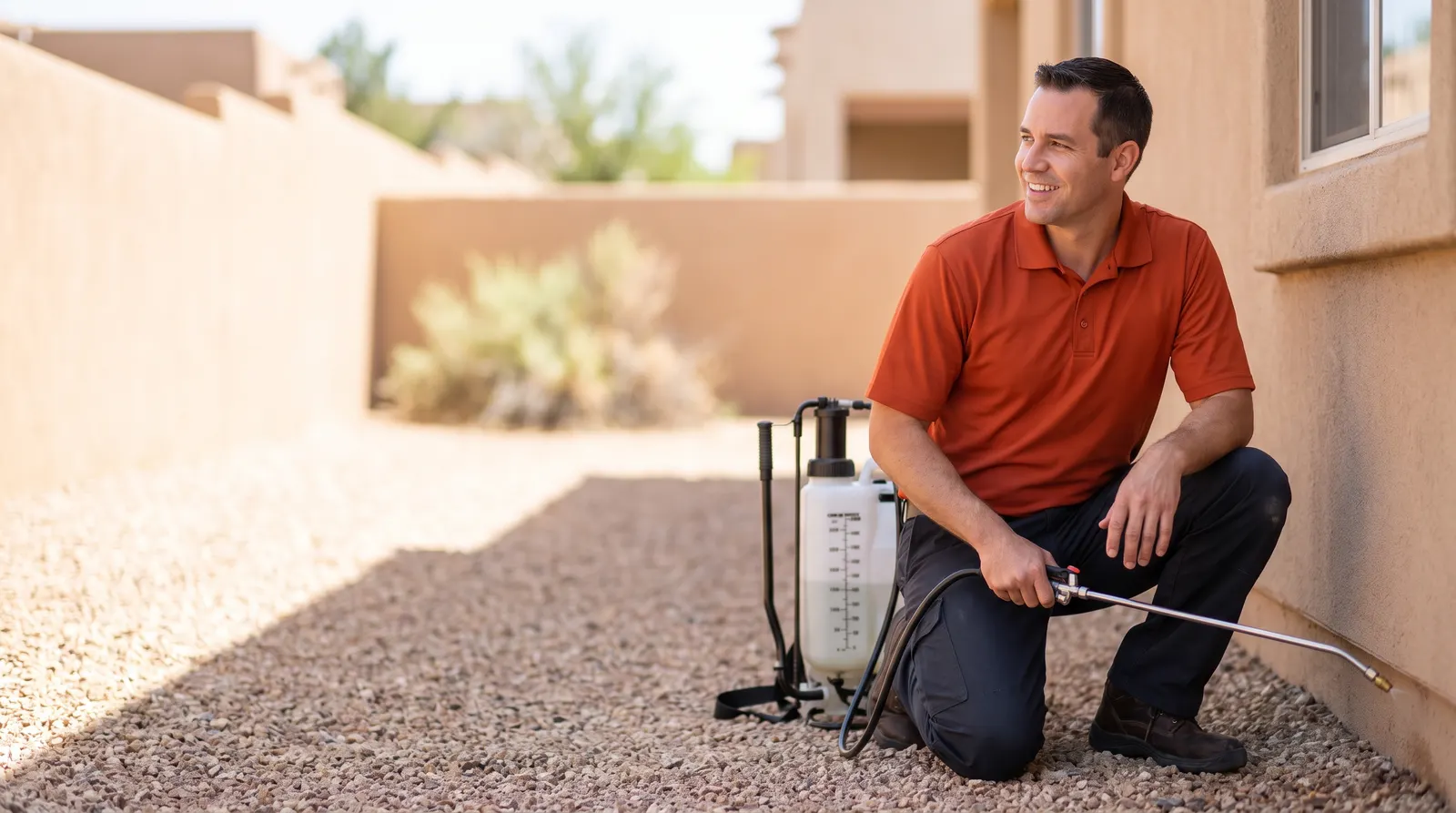
A pest control services company in Albuquerque is an environmental management operation that inspects structural perimeters, applies targeted treatments, and installs physical exclusion barriers against arid-climate arthropods and rodents.
Every service reflects the same meticulous attention to detail, whether it's a single job or a larger pest control services project across Albuquerque.
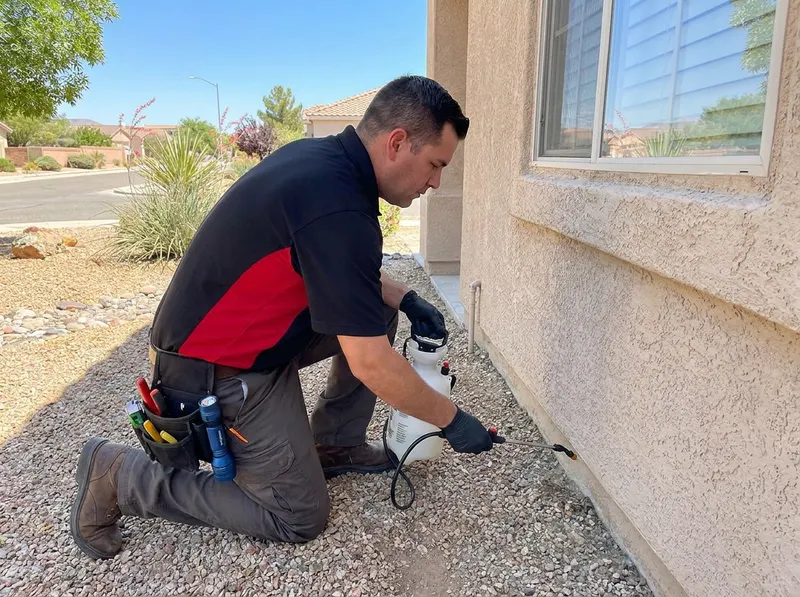
Quarterly defensive barrier applications treat exterior foundation edges, window perimeters, eaves, and plumbing penetrations against crickets, boxelder bugs, and earwigs. Formulations are calibrated to bind to stucco and brick without leaving surface residue. Technicians apply a continuous three-foot vertical band up exterior walls and a five-foot horizontal protective band across adjacent soil or pavers, creating a chemically resilient boundary that blocks crawling arthropods. Window frame seals, doorway thresholds, utility spigots, and crawlspace vents receive microencapsulated liquid treatments that maintain active knockdown power across 90-day intervals despite high ambient wind and fine airborne sand particulate.
Get a quote →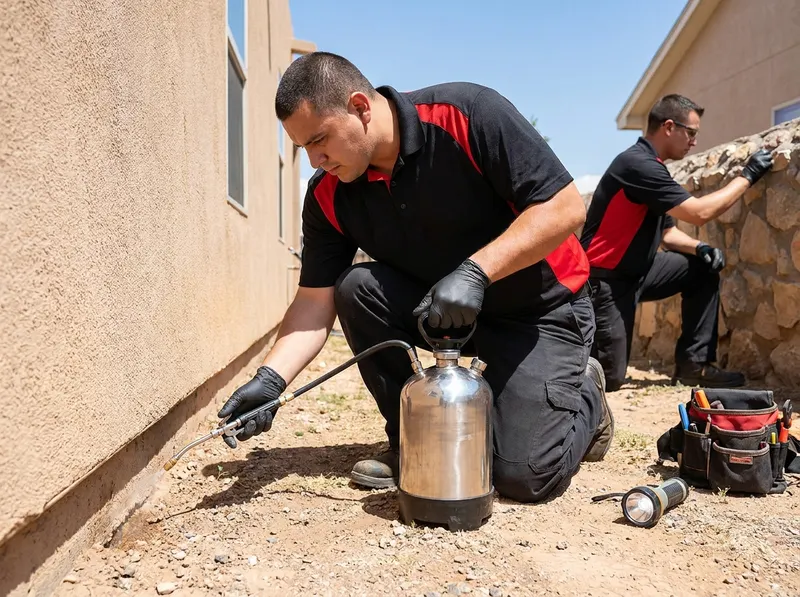
Targeted exterior applications focus on rock walls, decorative xeriscaping, and foundation expansion joints where bark scorpions and black widows shelter from daytime heat. Microencapsulated compounds cling to arthropod exoskeletons even through fine desert dust. Technicians utilize specialized ultraviolet inspection lamps during dusk sweeps to map localized scorpion harborage clusters within dry-stack rock retaining walls and concrete pavers. In addition to exterior foundation micro-capsule bandings, technicians apply dust treatments containing pyrethroids and silica aerogel into structural expansion joints, weeping mortar lines, and crawlspace voids where black widows construct dense cobwebs, preventing interior incursions without leaving oily residues on exterior masonry.
Get a quote →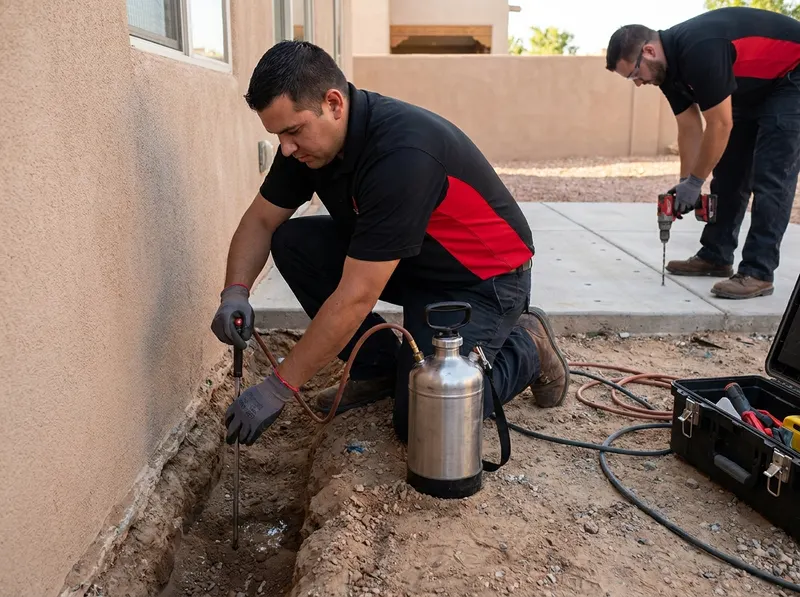
Continuous subterranean chemical barriers and localized injection protocols defend building foundations against desert subterranean termites. Treatments target foundational expansion slabs and utility conduit entries where moisture promotes foraging. Field specialists execute precision soil trenching six inches wide and six inches deep along exterior stem walls, infusing non-repellent liquid termiticides containing fipronil or imidacloprid directly into backfill soil at four gallons per ten linear feet. For monolithic concrete slabs and interior plumbing intrusions, precision drilling at twelve-inch intervals through garage aprons, patio slabs, and bathroom trap areas ensures continuous protective shielding beneath load-bearing framing, neutralizing foraging worker termites before they consume structural cellulose.
Get a quote →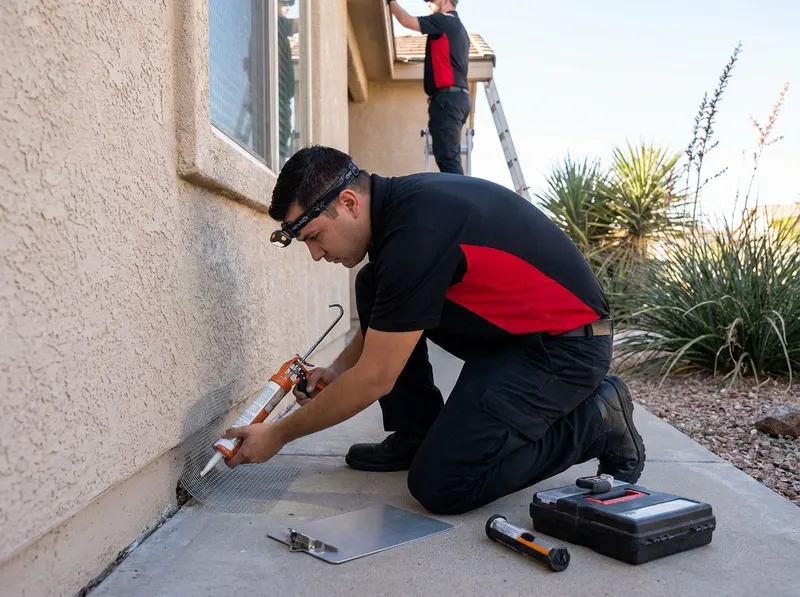
Physical exclusion repairs seal exterior entry voids larger than one-quarter inch using wire mesh and structural sealants, followed by tamper-resistant station placement targeting desert woodrats and house mice along exterior foundation lines. Technicians thoroughly inspect roof lines, architectural parapets, weep screeds, and HVAC chase penetrations, fastening heavy-duty 23-gauge galvanized hardware cloth over exposed openings to deny entry to agile pack rats. Inside attics and crawlspaces, mechanical snap traps positioned along structural runway framing eradicate established interior rodents without introducing toxic tracking powders that could foul attic insulation or pose health hazards to domestic pets.
Get a quote →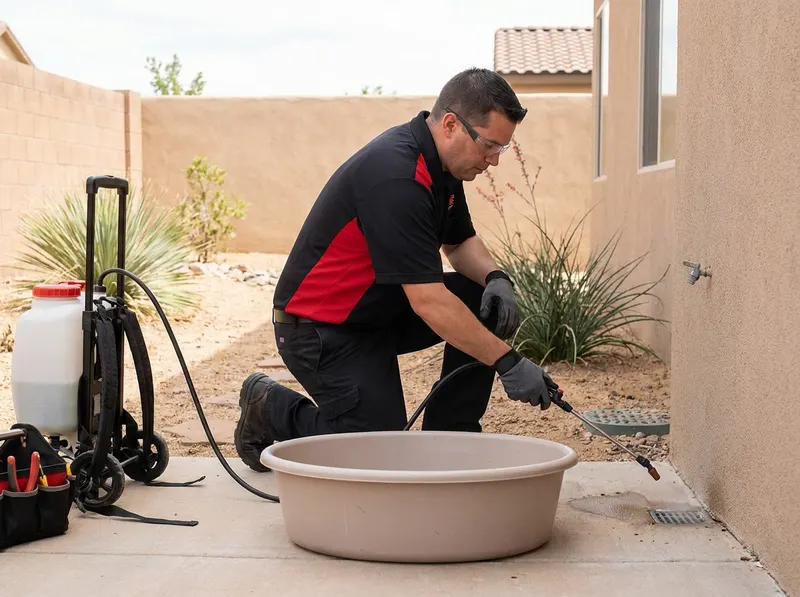
Targeted micro-misting and biological larvicide applications neutralize standing water zones, shaded courtyard vegetation, and property borders situated within low-lying Rio Grande river basin flyways. Technicians systematically treat decorative irrigation sumps, stormwater retention swales, and French drains using solid Bacillus thuringiensis israelensis (BTI) briquettes that eradicate mosquito larvae within 24 hours without harming birds, aquatic wildlife, or non-target predatory insects. Exterior foliage, courtyard ivy, low tree canopies, and sheltered undersides of exterior decks receive ultra-low-volume residual micro-mists embedded with insect growth regulators that disrupt the reproductive cycles of adult Culex and Aedes mosquitoes for four to six continuous weeks.
Get a quote →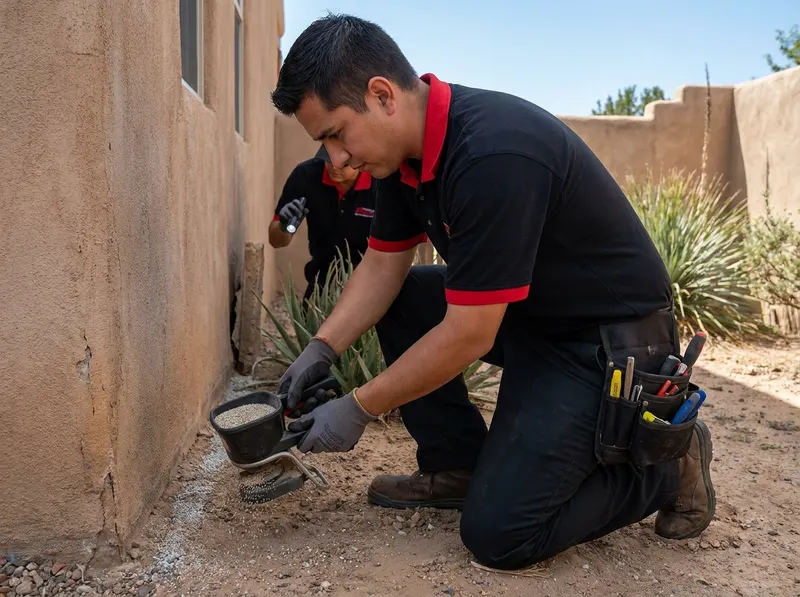
Perimeter granular barriers and deep harborage treatments target giant desert centipedes and darkling ground beetles around patio slabs, decorative railroad ties, and gravel borders before they move inside. Technicians utilize heavy, low-dust systemic granules that settle into subterranean stone voids where centipedes shelter from intense daytime ground temperatures exceeding 130 degrees Fahrenheit. Exterior perimeter soil lines, decorative river rock borders, and structural foundations receive high-pressure crack-and-crevice treatments that penetrate beneath foundational landscape fabric, eliminating underlying beetle larvae and predatory myriapods before late-summer storms prompt mass structural invasions.
Get a quote →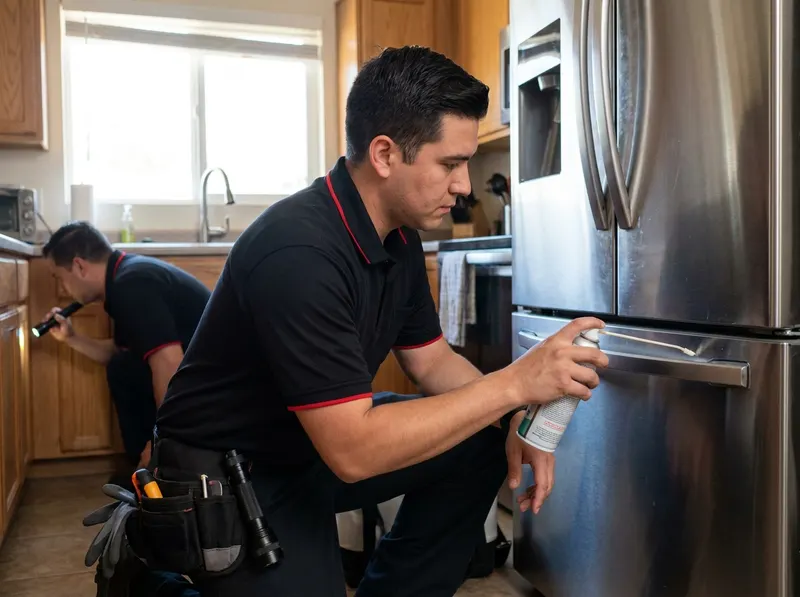
High-intensity cleanout protocols eliminate structural German cockroach infestations in residential kitchens, rental properties, and commercial food service areas. Specialized protocols avoid airborne aerosol sprays, relying instead on precision application of targeted abamectin and hydramethylnon gel baits inside electrical faceplates, cabinet hinge mortises, under-sink utility chases, and motor housings of refrigeration equipment. Baits are paired with insect growth regulators containing hydroprene, which prevents juvenile nymphs from reaching reproductive maturity. Thorough physical inspections and non-pesticidal sticky monitoring boards track population decline across two follow-up visits spaced fourteen days apart, guaranteeing structural nesting eradication.
Get a quote →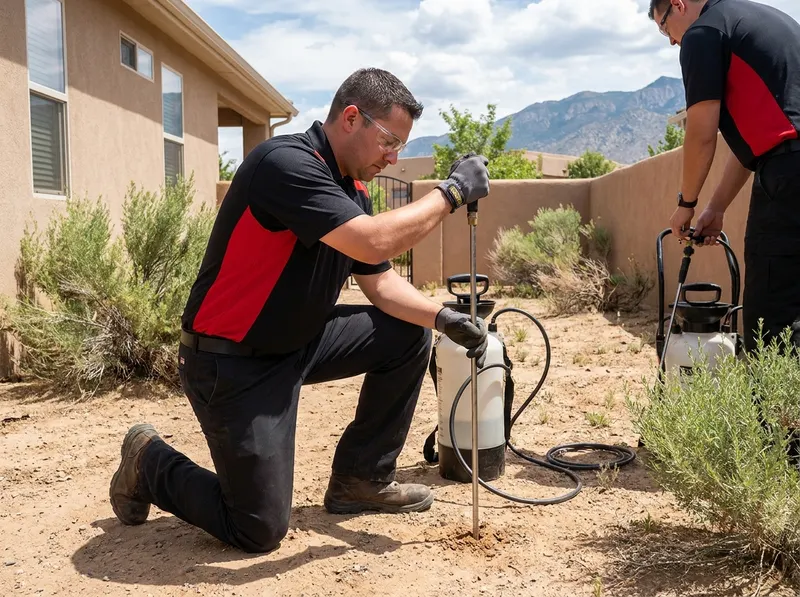
Specialized outdoor and indoor baiting programs target harvester ants, acrobat ants, and invasive Argentine ant supercolonies across property borders. Technicians identify specific pheromone foraging trails along landscape edging, flagstone walks, and masonry foundations, avoiding contact repellant sprays that cause colony budding. Technicians deposit target-specific delayed-action metabolic baits that foraging workers transport deep into subterranean chambers to poison queens and reproductive brood. Mound-drenching applications containing micro-suspension actives penetrate loose alluvial soils up to eighteen inches deep, extinguishing large outdoor nests that undermine brick pavers and landscape features.
Get a quote →You get a firm, itemized quote for your pest control services before any work begins, no surprises, no pressure.
Careful prep, tidy work, and a full cleanup when we are done. We treat your home and belongings like our own.
The same trusted, background-checked team from the first call to the final check.
Selecting structural pest defense requires matching environmental pest pressures to material longevity. If a residence faces occasional nuisance pests such as field crickets, boxelder bugs, or pavement ants, choose quarterly perimeter treatments, which apply a 3-foot vertical and 5-foot horizontal exterior barrier along the base of the foundation. If a residence borders undisturbed native terrain near Petroglyph National Monument, the Sandia Foothills, or the volcanic escarpment where bark scorpions and desert centipedes are prevalent, choose microencapsulated barrier fortification combined with water-activated granular yard applications across all gravel and decorative stone landscaping.
The trade-off centers on treatment scope versus material longevity: standard liquid applications cost less initially but require more frequent reapplication under intense desert ultraviolet radiation, whereas microencapsulated and crystalline formulas carry higher initial application costs but maintain chemical stability for up to 90 days in alkaline desert soils. If structural foundation footings show mud exploration tubes, bypass surface sprays entirely and choose liquid termiticide soil trenching, as surface applications do not penetrate down to subterranean colony networks. If interior scraping noises or gnawed ductwork indicate structural rodent infiltration, prioritize mechanical hardware cloth exclusion over chemical repellent sprays; repellent sprays dissipate within weeks, whereas galvanized steel wire mesh permanently eliminates structural ingress paths without hazardous residues.
For properties located within 500 yards of the Rio Grande or agricultural acequias, integrated botanical mosquito misting combined with insect growth regulators yields sustainable relief, whereas adulticide thermal fogging provides only a temporary 48-hour knock-down effect. Homeowners balancing immediate vector reduction with ongoing prevention should select bi-monthly barrier renewals during the active monsoon corridor from June through September, scaling back to quarterly inspections during dormant winter months.
Every project gets a firm, written price after a free on-site visit. Ranges below for orientation.
Tell us about your pest control services job and we'll send a clear, written quote, usually the same day. Or just call and talk to a real Albuquerque pro.
(505) 207-1870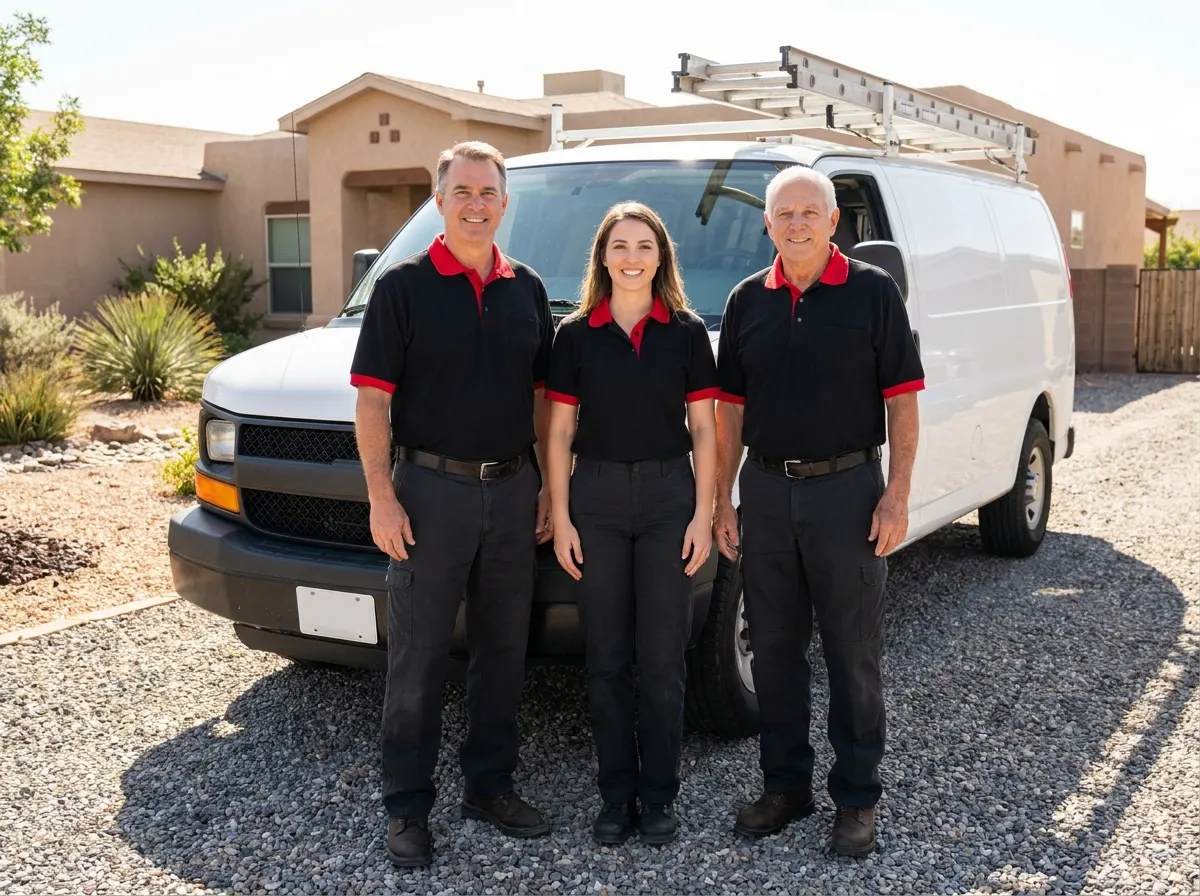
Albuquerque's elevation of 5,312 feet subjects pest defense barriers to extreme ultraviolet radiation and rapid thermal fluctuations between desert day and night. Residential zones near the Rio Grande ditch systems in the North Valley and South Valley experience heavy subterranean rodent and mosquito activity, while properties along the Sandia Foothills and Paradise Hills face seasonal invasions of bark scorpions and desert centipedes seeking interior moisture when seasonal irrigation shifts. Historic adobe and brick residences in Old Town, Huning Castle, and Nob Hill feature porous construction materials and deep architectural expansion voids that require specialized mechanical sealing techniques to prevent small-bodied desert rodents and wolf spiders from bypassing standard exterior treatments. Bernalillo County properties situated along major transit arteries including Interstate 25, Interstate 40, and Coors Boulevard frequently experience intense seasonal pest pressures, as surrounding commercial developments and native caliche clearing drive displaced desert arthropods directly into surrounding residential subdivisions. Furthermore, alkaline soil conditions with pH levels routinely measuring between 7.5 and 8.5 cause standard pyrethroid compounds to degrade prematurely, requiring technicians to utilize microencapsulated suspensions and crystalline matrix polymers that remain completely chemically inert against extreme high-desert minerals and ambient winds exceeding 40 miles per hour during spring squalls.
Free estimates for Albuquerque & the surrounding area.
 Nexaro Pest Removal